In the rapidly evolving landscape of digital creation, the need for trustworthy preservation mechanisms has become paramount. Organizations that generate, distribute, or license artificial intelligence outputs must confront questions of authenticity, ownership, and accountability. Content escrow combined with AI provenance offers a systematic approach to safeguarding digital assets while establishing a legally defensible chain of custody. This guide explores the technical, legal, and operational dimensions of implementing such a framework.
Understanding Content Escrow and AI Provenance
Definition of Content Escrow
Content escrow refers to a contractual arrangement in which a neutral third party holds digital assets on behalf of the parties involved. The escrow agent retains the material until predefined conditions, such as payment completion or compliance verification, are satisfied. This mechanism mitigates risk by ensuring that the beneficiary can access the content even if the provider defaults. In the context of AI, escrow may include model weights, training data, and associated documentation.
Definition of AI Provenance
AI provenance denotes the systematic recording of the lineage, transformations, and usage history of artificial intelligence artifacts. Provenance data typically capture the source of training data, preprocessing steps, model architecture, and versioning information. By maintaining an immutable audit trail, provenance enables stakeholders to verify that an output originates from a legitimate and authorized process. Legal systems increasingly recognize provenance records as evidence of due diligence.
Importance of a Legal Chain of Custody
A legal chain of custody is a documented sequence that demonstrates who has possessed, modified, or transferred a digital asset at each point in time. This chain is essential when disputes arise over intellectual property, regulatory compliance, or liability for AI‑generated decisions. Without a verifiable custody trail, parties may struggle to prove authenticity or to allocate responsibility. Content escrow and AI provenance together construct a robust chain that satisfies both technical and judicial scrutiny.
Legal Foundations for Digital Content Custody
Relevant Legislation and Standards
Many jurisdictions have enacted statutes that address electronic evidence, data integrity, and AI accountability. The United States Federal Rules of Evidence, for example, require a clear chain of custody for digital exhibits to be admissible in court. The European Union’s Digital Services Act and AI Act impose obligations on providers to maintain transparency and traceability. International standards such as ISO/IEC 27001 and ISO/IEC 27701 provide frameworks for information security and privacy that intersect with escrow practices.
Jurisdictional Considerations
Cross‑border transactions introduce complexity because each jurisdiction may apply different evidentiary standards. Parties must assess where the escrow agent is incorporated, where the data will be stored, and which law governs the escrow agreement. Conflict‑of‑law clauses can designate a neutral forum to resolve disputes and to enforce custody requirements. Careful drafting of escrow contracts ensures that the legal chain of custody remains enforceable regardless of geographic dispersion.
Implementing a Robust Content Escrow Process
Step‑by‑Step Workflow
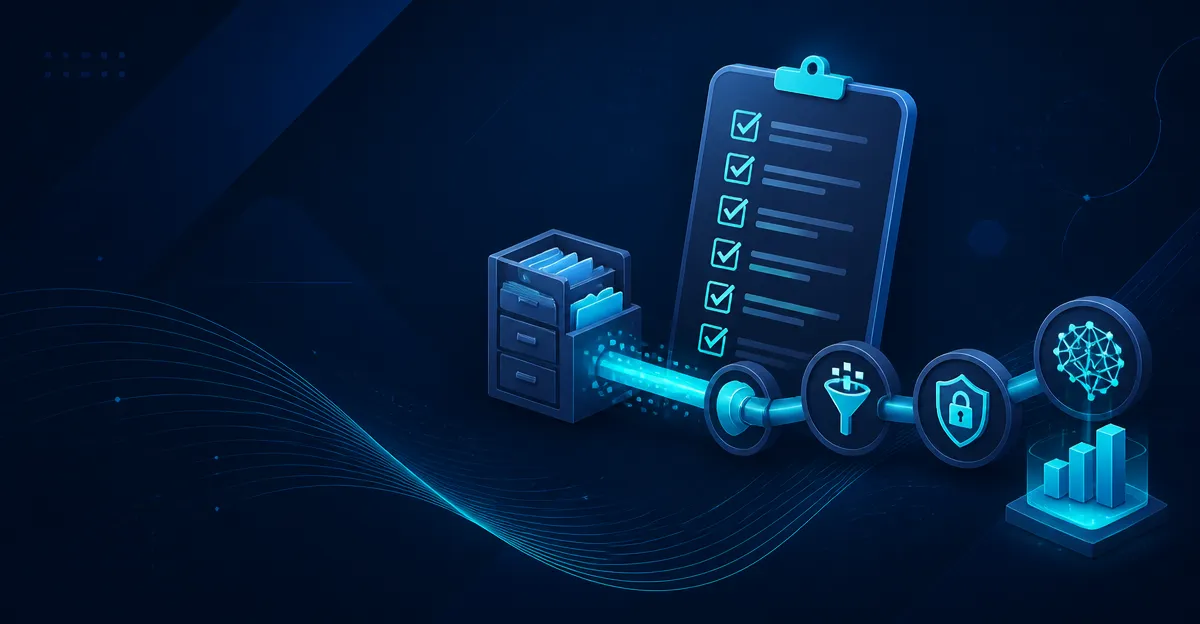
- Identify the digital assets that require escrow, including model binaries, training datasets, and licensing documents.
- Select a qualified escrow provider that offers secure storage, cryptographic hashing, and audit‑log capabilities.
- Define trigger events—such as bankruptcy, breach of contract, or regulatory request—that will activate the release of assets.
- Draft an escrow agreement that specifies verification procedures, confidentiality obligations, and dispute‑resolution mechanisms.
- Execute the deposit by uploading assets, generating immutable hashes, and recording metadata in a provenance ledger.
- Conduct periodic verification audits to confirm that stored assets remain unaltered and that custody records are up to date.
Technical Infrastructure Requirements
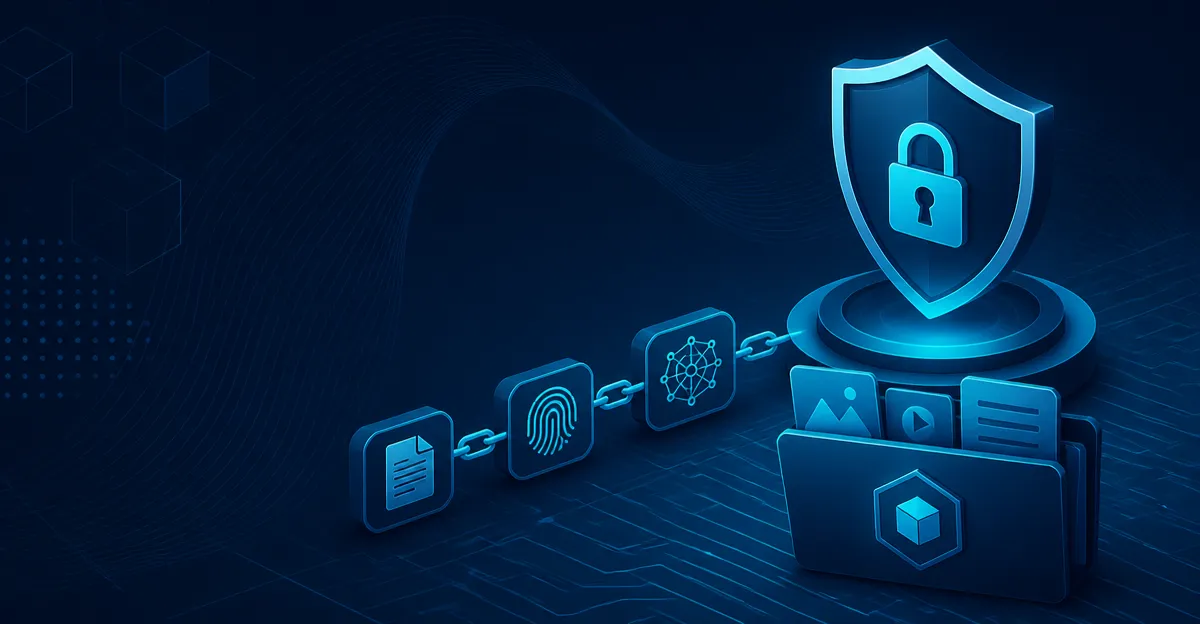
Secure storage must employ encryption at rest and in transit, with keys managed by a hardware security module (HSM). Redundant geographic replication safeguards against data loss due to natural disasters or cyber‑attacks. Integration with version‑control systems such as Git enables automatic capture of changes and facilitates rollback when necessary. Provenance records should be stored in tamper‑evident formats, for example using Merkle trees or blockchain anchors.
Documentation and Audit Trails
Every interaction with the escrowed content—upload, access, modification, or release—must be logged with timestamps, user identifiers, and cryptographic signatures. Audit logs should be immutable, searchable, and retained for a period consistent with contractual and regulatory requirements. Regular internal reviews of the logs help detect unauthorized access attempts before they compromise the chain of custody. Exportable audit reports provide evidence for regulators, auditors, or litigants.
AI Provenance Mechanisms
Metadata Tagging
Metadata tagging involves attaching descriptive attributes to AI artifacts that capture origin, purpose, and processing steps. Tags may include dataset provenance identifiers, model version numbers, hyperparameter settings, and ethical risk assessments. Standardized schemas such as the W3C Provenance Ontology (PROV‑O) facilitate interoperability across tools and organizations. Properly curated metadata enhances discoverability and supports automated compliance checks.
Blockchain Integration
Blockchain technology offers a decentralized ledger that can anchor provenance records in an immutable fashion. By recording cryptographic hashes of model files on a public or permissioned chain, any subsequent alteration becomes instantly detectable. Smart contracts can enforce release conditions, automatically granting access when predefined criteria are met. While blockchain introduces transparency, it also raises concerns about privacy and scalability that must be balanced against legal requirements.
Provenance Frameworks
Several open‑source frameworks assist developers in capturing AI provenance, including MLflow, Pachyderm, and the Open Provenance Model. These tools provide APIs for logging experiment parameters, data lineage, and model artifacts. Integration with continuous‑integration pipelines ensures that provenance data is generated continuously rather than retrospectively. Selecting a framework that aligns with existing technology stacks reduces implementation friction.
Comparative Analysis of Escrow Models
Traditional vs. AI‑Enabled Escrow
Traditional escrow focuses primarily on static documents such as source code or legal contracts, relying on manual verification processes. AI‑enabled escrow must accommodate large binary files, dynamic model updates, and complex data dependencies, necessitating automated integrity checks. The former typically uses simple hash verification, whereas the latter may employ differential hashing and provenance graphs. Consequently, AI‑enabled escrow demands higher computational resources but delivers superior assurance of authenticity.
Pros and Cons
- Pros: Enhanced trust, regulatory compliance, risk mitigation, and clear attribution of AI outputs.
- Cons: Increased operational complexity, higher costs for secure storage, and potential performance overhead during verification.
- Pros (AI‑Specific): Ability to trace model evolution, detect data poisoning, and support reproducible research.
- Cons (AI‑Specific): Large data volumes may strain bandwidth, and privacy regulations may limit the sharing of provenance details.
Real‑World Case Studies
Media Company Protecting Archival Footage
A leading broadcast network implemented a content escrow service to preserve decades of digitized footage that were used to train an AI captioning system. The escrow agreement stipulated release of the archive to a third‑party vendor only after the network filed for bankruptcy protection. By storing cryptographic hashes on a private blockchain, the network proved in court that the footage remained unaltered, thereby preserving its licensing revenue streams. The case illustrates how escrow and provenance together safeguard valuable intellectual property.
Healthcare AI Model Deployment
A hospital consortium developed a diagnostic AI model trained on patient imaging data and placed the model and its training dataset in escrow with a certified health‑information escrow provider. The escrow contract required that the model be released to a regulator only after an independent audit confirmed compliance with HIPAA and the EU GDPR. Provenance records captured each data preprocessing step, enabling auditors to verify that no protected health information was inadvertently embedded in the model. The successful audit allowed the consortium to obtain market clearance while demonstrating a rigorous chain of custody.
Best Practices and Recommendations
- Conduct a comprehensive risk assessment to identify which digital assets merit escrow protection.
- Select an escrow provider with proven expertise in cryptographic hashing, secure key management, and audit‑log integrity.
- Adopt standardized provenance schemas such as PROV‑O to ensure interoperability across platforms.
- Integrate provenance capture into the continuous‑integration/continuous‑deployment (CI/CD) pipeline to automate documentation.
- Periodically test release triggers through simulated breach scenarios to confirm that contractual conditions function as intended.
- Maintain clear documentation of jurisdictional choices and incorporate conflict‑of‑law clauses in escrow agreements.
By following these practices, organizations can construct a resilient framework that not only protects digital content but also satisfies emerging legal expectations for AI transparency. The combination of content escrow and AI provenance creates a defensible chain of custody that can withstand technical challenges and judicial scrutiny alike. As regulatory landscapes continue to evolve, the ability to demonstrate meticulous stewardship of digital assets will become a competitive advantage. Ultimately, a well‑designed escrow and provenance strategy empowers stakeholders to trust the origins, integrity, and legitimacy of AI‑generated outcomes.
Conclusion
Establishing a legal chain of custody for digital content in the age of artificial intelligence requires deliberate coordination of contractual, technical, and regulatory measures. Content escrow provides the neutral holding environment, while AI provenance supplies the detailed lineage necessary for verification. Together, they form a comprehensive solution that addresses authenticity, accountability, and compliance concerns. Organizations that invest in these mechanisms today will be better positioned to navigate future legal challenges and to capitalize on the full potential of AI‑driven innovation.
Frequently Asked Questions
What is content escrow and how does it protect AI assets?
Content escrow is a contract where a neutral third‑party holds AI models, data, or documentation until agreed conditions are met, ensuring the beneficiary can access the assets even if the provider defaults.
How does AI provenance create a trustworthy audit trail?
AI provenance records the source, preprocessing, model architecture, version, and usage history of AI artifacts, providing an immutable lineage that verifies authenticity and accountability.
When should organizations consider using content escrow for AI outputs?
Organizations should use escrow when they need to guarantee delivery of AI models or data after payment, compliance checks, or in case of supplier failure.
What legal benefits does combining escrow with AI provenance offer?
The combination establishes a defensible chain of custody, helping resolve disputes over ownership, licensing, and liability by documenting both transfer conditions and artifact history.
Can escrow agents verify AI model integrity before release?
Yes, escrow agents can run integrity checks, hash verification, and compliance audits on stored AI assets to ensure they match the agreed specifications before releasing them.