Grey Hat SEO Showdown: Comparing the Risks and Rewards of Hiring a Grey‑Hat SEO Firm vs. a White‑Hat Agency
Published December 5, 2025
Introduction
On December 5, 2025, decision makers still confront the same central question when selecting an SEO partner: whether to accept faster gains at higher risk or to pursue steady long-term growth. This comparison examines the tradeoffs of hiring an SEO firm that uses grey hat techniques versus retaining a white-hat agency that follows established search engine guidelines. The article provides concrete examples, vetting steps, and recovery plans to support an informed decision.
What Are Grey Hat and White Hat SEO?
Definition of White Hat SEO
White-hat SEO describes practices that comply with search engine guidelines and best practices, focusing on content quality, user experience, and ethical link building. Agencies that practice white-hat methods prioritize sustainable traffic, clear reporting, and long-term domain authority gains. This approach relies on transparent tactics and predictable outcomes, even if results arrive more slowly.
Definition of Grey Hat SEO
Grey-hat SEO occupies the middle ground between compliant tactics and explicit violations of search engine rules, often relying on loopholes or semi-risky strategies to accelerate results. Firms that employ grey-hat methods may use automated link building, private blog networks, or aggressive content syndication while avoiding overtly spammy signals. The intent is usually faster ranking improvements, but the approach carries an implicit risk of algorithmic adjustments or manual penalties.
Common Grey Hat Techniques and Real-World Examples
Techniques
Typical grey-hat methods include automated link creation, scaled guest posting with low editorial standards, content spinning, and selective cloaking for search engines. Some agencies engage in partial private blog network activity or buy aged domains to inherit link profiles temporarily. Many of these tactics aim to produce immediate ranking signals rather than invest in long-term content authority.
Examples and Case Applications
For example, a retail brand facing a seasonal sales window might use an agency to create hundreds of low-cost guest posts and purchased contextual links to boost visibility for a six-week promotion. In another case, a software vendor might repurpose spun content across multiple domains to capture informational queries while developing its core assets. These approaches can yield short-term visibility gains but will require careful risk management to avoid search engine reactions.
Short‑Term Rewards of Hiring a Grey‑Hat SEO Firm
Faster Ranking Improvements
Grey-hat techniques often produce faster ranking lifts because they emphasize immediate link and content signals that search engines evaluate. This rapid movement can translate into quick traffic and revenue gains during time-sensitive campaigns or product launches. Firms that promise rapid returns typically structure deliverables around quantifiable ranking surges.
Lower Upfront Cost and Aggressive Scaling
Because grey-hat tactics can be automated or outsourced at scale, initial costs tend to be lower than a prolonged white-hat content and PR program. Companies with constrained budgets may find the initial cost-benefit attractive, particularly when the campaign has a narrow window to succeed. The downside is that short-term savings can convert into far larger costs if search engines impose penalties.
Long‑Term Risks and Consequences
Search Engine Penalties and Visibility Loss
One of the most significant dangers of hiring an SEO firm that uses grey hat techniques is the risk of algorithmic devaluation or manual penalties, which can dramatically reduce organic visibility. Historical examples include retail domains that experienced major traffic declines after link-scheme discoveries, illustrating the real economic impact. Recovery from such events often requires extensive audits, removal efforts, and time-intensive appeals.
Brand Reputation and Operational Fragility
Beyond search penalties, grey-hat campaigns can damage a brand if poor-quality content or spammy links appear under the company name. Customers and partners may associate low-quality placements with the brand, harming credibility and conversions. The firm may also become dependent on the grey-hat provider, creating vendor lock-in and operational fragility if tactics are discontinued.
Notable Case Studies
Public Examples of Penalties
Historically, several high-profile companies experienced publicized ranking declines when search engines targeted link schemes or manipulative tactics. One prominent retailer suffered a documented drop after vendors engaged in large-scale link buying, prompting public scrutiny and a multi-month recovery. These cases demonstrate the reputational and financial shocks possible when short-term tactics backfire.
Controlled Grey‑Hat Use in Campaigns
Conversely, some companies have used targeted grey-hat methods deliberately in limited campaigns, then phased them out in favor of earned media and content. For instance, a seasonal event promoter might accept short-duration visibility spikes from purchased placements while preparing long-term outreach. When properly bounded and transparently authorized, such strategies can be effective without permanent harm, although they remain risky.
How to Evaluate an SEO Firm: Step‑by‑Step Vetting Guide
Initial Discovery Questions
Ask direct questions about tactics, reporting, and partner networks to determine whether a firm engages in grey-hat activity. Request case studies with verifiable metrics and references from comparable clients in similar sectors. Insist on a clear description of deliverables, timelines, and measurable KPIs tied to legitimate traffic signals.
Red Flags and Contractual Safeguards
Red flags include guarantees of fixed ranking positions, opaque link sources, or vague reporting that hides methods. Include contract clauses that require disclosure of tactics, a right to audit work, and indemnity for demonstrable policy violations. Consider adding termination and remediation clauses tied to manual actions or algorithmic penalties that are attributable to vendor work.
Practical Vetting Checklist
- Request a written methodology and sample deliverables for the first 90 days.
- Ask for two client references with similar business models and verify results independently.
- Require monthly transparency reports showing link sources, content placements, and outreach logs.
- Set milestone reviews to assess quality, traffic trends, and any suspicious signals.
When Grey‑Hat Techniques May Be Considered
Time‑Sensitive or Low‑Value Pilots
Some organizations accept limited grey-hat tactics for tight windows where short-term results justify the risk, such as flash sales, event registrations, or product launches. The key is explicit authorization, tight scope limits, and a documented exit plan to avoid lingering exposure. Teams should treat these efforts as experiments with measurable exposure controls.
Risk Mitigation Practices
To mitigate risks, firms should employ thorough tracking, isolate questionable channels, and rapidly cease manipulative activities at the first sign of negative signals. Companies should also parallel-invest in white-hat content and PR to reduce dependency on risky tactics. This diversification helps protect long-term organic health while pursuing immediate objectives.
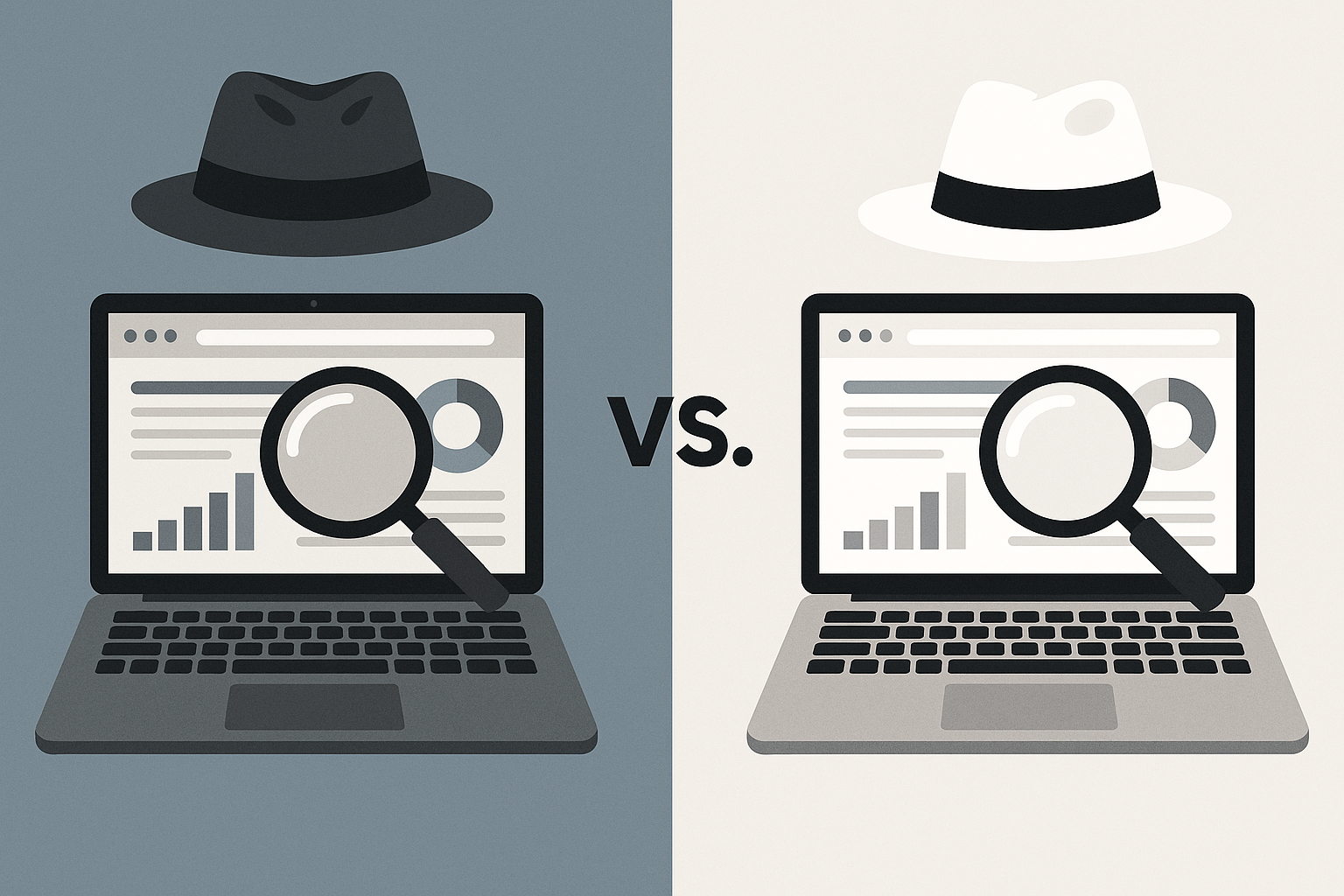
Side‑by‑Side Comparison: Grey Hat vs White Hat
The following comparison illustrates practical tradeoffs across cost, speed, sustainability, and reputational risk. This framework helps decision makers align vendor selection with business tolerance for risk and long-term goals.
Comparison Table (Summarized)
- Cost: Grey-hat often lower upfront; white-hat higher initial investment.
- Speed: Grey-hat provides faster ranking shifts; white-hat yields gradual, sustainable gains.
- Risk: Grey-hat carries higher penalty and reputation risk; white-hat is low-risk and defensible.
- Sustainability: White-hat builds lasting authority; grey-hat may collapse when tactics are discovered.
- Scalability: Grey-hat scales quickly but fragilely; white-hat scales steadily with content and relations.
Recovery Steps If a Grey‑Hat Strategy Backfires
Immediate Remediation Checklist
If an organization suspects a penalty or sudden traffic loss, the first action is to halt all questionable campaigns and audit recent vendor activity. Next, document all placements, links, and content published by third parties for removal requests and disavowal preparation. This initial containment reduces ongoing risk and prepares the site for formal recovery actions.
Step‑by‑Step Recovery Process
- Conduct a full backlink and content audit to identify problematic assets.
- Contact third parties to request removal of manipulative links and low-quality content.
- Compile a disavow file where removal is impossible and maintain transparent documentation of outreach efforts.
- Submit a reconsideration request if a manual action was applied, including a remediation report and proof of cleanup.
- Invest in white-hat content and outreach to rebuild authority while monitoring for algorithm recovery signals.
Final Recommendation and Practical Next Steps
Organizations that prioritize long-term brand health and predictable organic performance should favor white-hat agencies and transparent SEO practices. Businesses with short-term, bounded needs can consider limited grey-hat tactics only with explicit board-level approval, contractual protections, and documented exit strategies. In all cases, one sensible next step is to require prospective vendors to disclose methods in writing and to test initial work on a low-risk campaign before scaling.