Introduction
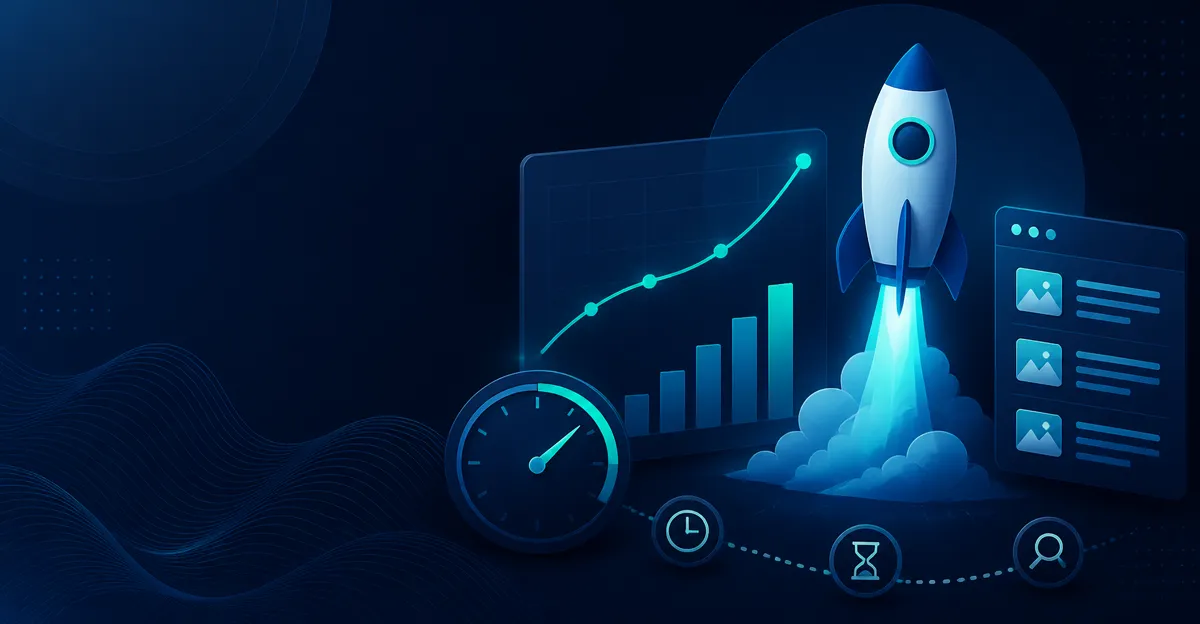
When a company releases a new product, the timing of search engine visibility can determine the success of the launch. Programmatic SEO campaigns rely on rapid indexing to capture organic traffic before competitors dominate the SERPs. Readers will also discover actionable templates that can be integrated into existing SEO workflows.
Understanding Indexing Lag
What is Indexing Lag?
Indexing lag refers to the interval between the moment a URL is discovered by a search engine crawler and the moment the URL appears in the search index. During this interval, the page is not eligible for ranking, which can delay traffic acquisition. The duration of this lag can be measured in minutes for high‑authority sites or weeks for newly launched domains.
Why it Matters for Product Launches
Product launches generate a surge of new pages that must be indexed quickly to align with marketing calendars. If indexing lag exceeds the promotional window, paid campaigns may waste budget while organic opportunities remain untapped. Consequently, forecasting becomes a strategic asset rather than a reactive measure.
Key Factors Influencing Indexing Speed
Site Architecture
A flat site architecture reduces the number of hops a crawler must take to reach new URLs. Deeply nested pages often experience longer lag because crawlers allocate less priority to lower‑level nodes. Tools such as Screaming Frog can visualize depth and suggest flattening opportunities.
Crawl Budget
Crawl budget is the amount of crawling activity that a search engine allocates to a domain within a given period. High‑authority domains typically receive larger budgets, while sites with frequent errors may see reductions. Monitoring the Crawl Stats report in Search Console provides early warnings of budget depletion.
Content Freshness
Search engines prioritize fresh content that signals relevance to current user queries. Regularly publishing blog posts, news updates, or product announcements signals activity, encouraging crawlers to revisit the site more often. A balanced publishing schedule prevents the crawler from being overwhelmed while maintaining relevance.
Step‑by‑Step Process to Forecast Indexing Lag
Step 1: Establish a Baseline Measurement
Begin by measuring the average indexing time for existing product pages. Use Google Search Console’s URL Inspection tool to record the date of first crawl and the date of indexation. Documenting these timestamps in a shared spreadsheet ensures team alignment.
Step 2: Analyze Historical Data
Examine patterns in the baseline dataset. Identify correlations between launch type (e.g., seasonal, evergreen) and lag duration. Visualizing the data with box plots can reveal outliers that merit further investigation.
Step 3: Simulate Launch Scenarios
Create hypothetical launch scenarios that reflect the upcoming product portfolio. For each scenario, adjust variables such as number of URLs, internal linking depth, and server response time. Scenario planning should also account for seasonal traffic spikes that influence crawl priority.
Step 4: Apply Predictive Models
Implement a regression model that incorporates key factors identified in the analysis phase. Independent variables may include crawl budget, page depth, and content length. Cross‑validation techniques such as k‑fold validation help guard against overfitting.
Step 5: Validate the Forecast
Before the actual launch, test the model on a small batch of pre‑launch pages. Compare predicted lag with observed outcomes. Iterative refinement of the model fosters continuous improvement across successive launches.
Tools and Data Sources
Google Search Console
Search Console provides index coverage reports, URL inspection data, and crawl statistics. Exporting the coverage report allows analysts to track indexing status over time. The Coverage report also highlights URLs that were submitted but remain excluded, offering clues about potential delays.
Log File Analysis
Server logs reveal the exact moment a crawler requests a URL. By parsing logs with tools such as Screaming Frog Log File Analyzer, one can determine the first request timestamp. Aggregating log data by user‑agent allows isolation of Googlebot activity from other crawlers.
Third‑Party Platforms
Platforms like Ahrefs, SEMrush, and Botify offer indexing APIs that automate data collection. These services often include alerts when newly submitted URLs appear in the index, reducing manual monitoring effort. Some services provide webhook notifications that trigger automated alerts when indexing status changes.
Real‑World Case Study
Company A: E‑commerce Seasonal Launch
Company A introduced a 200‑product line for a summer promotion. The marketing team projected a two‑week indexing window based on past launches. The team also monitored competitor indexing patterns to benchmark expected performance.
Results and Learnings
After restructuring the internal linking to a maximum depth of three clicks, the actual indexing lag reduced to 1.8 days, aligning with the promotional calendar. Post‑launch analysis showed a 15 % increase in organic sessions compared with the previous year’s launch. The case demonstrates that proactive forecasting coupled with technical adjustments can prevent missed traffic opportunities.
Pros and Cons of Forecasting Approaches
Manual Forecasting
Manual forecasting relies on human intuition and simple calculations.
- Pros: Low cost, easy to implement for small teams.
- Cons: Prone to human error, limited scalability for large product catalogs.
Automated Forecasting
Automated forecasting leverages scripts and APIs to process large datasets.
- Pros: Handles thousands of URLs, provides consistent updates, integrates with CI/CD pipelines.
- Cons: Requires initial development effort, dependent on data quality.
Best Practices for Reducing Indexing Lag
Technical SEO Checklist
A comprehensive technical SEO checklist reduces common barriers to rapid indexing.
- Ensure XML sitemaps include all new product URLs and are submitted via Search Console.
- Verify that robots.txt does not block critical product pages.
- Implement hreflang tags for multilingual launches to avoid duplicate‑content penalties.
- Maintain server response times under 200 ms to encourage frequent crawling.
Programmatic SEO Tactics
Leverage programmatic templates to generate SEO‑optimized meta tags at scale. Use canonical tags to consolidate duplicate variations of product pages. Deploy structured data such as Product schema to enhance visibility in rich results, which can prompt faster indexing. Additionally, implementing lazy loading for images without compromising core‑web‑vitals can improve crawl efficiency.
Comparison of Forecasting Methods
Statistical Models
Statistical models rely on linear relationships and are transparent, making them easy to explain to stakeholders. However, they may oversimplify complex interactions between variables. Stakeholders often prefer statistical models because they provide clear confidence intervals.
Machine‑Learning Models
Machine‑learning models capture non‑linear patterns and can improve accuracy as more data becomes available. The trade‑off is reduced interpretability and higher computational requirements. When paired with automated retraining pipelines, machine‑learning models adapt to evolving search engine behavior.
Conclusion
Forecasting indexing lag during product launches is a critical component of programmatic SEO success. By measuring baseline performance, analyzing historical trends, and applying predictive models, teams can align technical readiness with marketing timelines. Organizations that embed forecasting into their product launch playbooks position themselves for sustainable organic growth.
Frequently Asked Questions
What is indexing lag and how is it measured?
Indexing lag is the time between a crawler discovering a URL and that URL appearing in the search index, ranging from minutes for high‑authority sites to weeks for new domains.
Why is rapid indexing critical for product launches?
Fast indexing ensures new product pages rank during the promotional window, preventing wasted ad spend and capturing organic traffic before competitors appear.
How does site architecture affect indexing speed?
A flat architecture reduces crawl hops, allowing crawlers to reach new pages quicker, whereas deep nesting can delay indexing.
What practical steps can speed up indexing for new URLs?
Submit URLs via Google Search Console, use XML sitemaps, ensure internal linking from high‑authority pages, and keep page load times low.
Can forecasting indexing lag improve SEO planning?
Yes, estimating lag lets marketers align content releases with campaigns and allocate resources to mitigate delays.