How to Implement Fan‑Out Queries in LLM Pipelines: A Step‑by‑Step Guide to Scalable AI Performance
Published December 23, 2025. This guide explains practical patterns, trade‑offs, and operational steps for fan‑out queries in LLM pipelines.
Introduction
Large language model pipelines increasingly demand parallel, low‑latency retrieval and computation strategies. Fan‑out queries are a common architectural pattern that enables parallelism across retrieval sources, model invocations, and specialized processors.
This article presents a step‑by‑step approach to design and implement fan‑out queries in LLM pipelines, including real‑world examples, case studies, monitoring advice, and performance trade‑offs. It targets engineers and architects who seek scalable AI performance while preserving correctness.
What Are Fan‑Out Queries and Why They Matter
Definition and basic concept
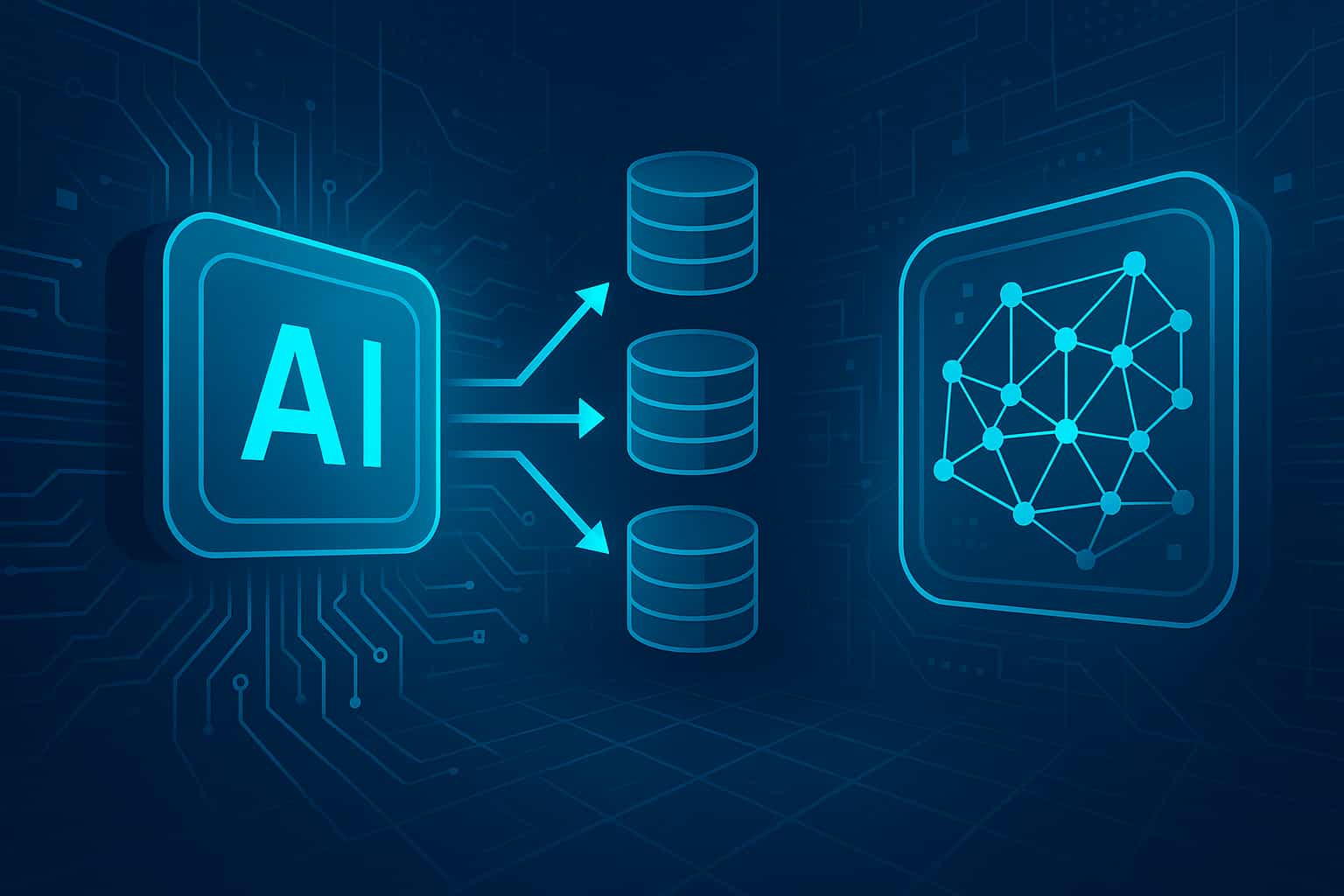
A fan‑out query splits a single incoming request into multiple parallel subrequests to different components or data sources. The system then aggregates responses into a consolidated output for downstream processing.
In LLM pipelines, fan‑out queries often distribute work across retrievers, embedding stores, specialized LLMs, and microservices to improve throughput and reduce response latency.
Key use cases in LLM pipelines
Typical use cases include multi‑source retrieval for knowledge augmentation, ensemble scoring across model variants, and parallel prompt expansion for multi‑step reasoning. These patterns leverage fan‑out queries to scale horizontally.
For example, a question answering system may fan out to a vector store, a web search API, and an internal database before consolidating retrieved facts for the LLM prompt.
High‑Level Architecture Patterns
Fan‑out to retrievers then LLM (retrieval‑first)
In this pattern, the pipeline fans out the query to several retrievers in parallel, merges results, and constructs a prompt for a single LLM invocation. This pattern emphasizes recall and enriched context.
It is appropriate when retrieval sources have complementary coverage and when a single LLM can synthesize heterogeneous information reliably.
Fan‑out to models (ensemble or cascading)
Here the system dispatches parallel model calls with different prompts, temperatures, or models, then aggregates outputs with a selector or reranker. This approach improves robustness and can reduce hallucination risk.
It suits tasks where model diversity enhances accuracy, such as summarization ensembles or multi‑step reasoning with independent hypothesis generation.
Hybrid multi‑stage pipelines
Hybrid pipelines fan out in multiple stages: initial retrievers, parallel model scorers, and downstream microservices for validation. This staged approach balances breadth and cost by pruning results between stages.
It is useful for high‑value queries that justify deeper processing while maintaining overall throughput needs.
Step‑by‑Step Implementation Guide
1. Define goals and constraints
One must articulate latency targets, cost budget, error tolerance, and quality metrics before designing a fan‑out architecture. Clear goals guide decisions about the number of parallel branches and aggregation logic.
For example, an interactive chat system may prioritize sub‑second latency, while an offline batch analysis job can accept longer durations to improve recall.
2. Choose parallelization boundaries
Decide whether to fan out at retrieval, model invocation, or post‑processing layers. Each boundary affects resource utilization, complexity, and observability in different ways.
Retrieval fan‑outs provide broader context with minimal LLM cost, while model fan‑outs increase compute cost but can enhance output quality through ensembles.
3. Implement non‑blocking orchestration
Use asynchronous request handling and non‑blocking IO to dispatch subrequests concurrently. Typical implementations use event loops, thread pools, or managed concurrency frameworks to maximize utilization.
Example pseudocode demonstrates the orchestration pattern and error handling for partial failures.
// Pseudocode
async function handleQuery(query) {
  let tasks = [retrieverA(query), retrieverB(query), webSearch(query)];
  let results = await Promise.allSettled(tasks);
  let merged = mergeResults(results);
  return llmCall(buildPrompt(merged));
}
4. Design aggregation and gating logic
Aggregation should include deduplication, relevance scoring, and confidence thresholds. The gating logic decides whether to proceed to expensive stages such as model ensembles.
For instance, a pipeline can skip ensemble model calls if a single high‑confidence retriever response satisfies a predefined threshold.
5. Apply backpressure and resource controls
Safeguards such as rate limits, concurrency budgets, and circuit breakers prevent downstream overload. These controls preserve stability when traffic spikes occur or when external services degrade.
One recommended control is a token bucket to limit concurrent LLM invocations and a queue with prioritized requests for critical users.
6. Instrumentation and observability
Instrument latency, success rates, and partial failure rates for each branch. Collect end‑to‑end metrics and per‑branch telemetry to identify bottlenecks and iterate on the design effectively.
Structured logs, distributed traces, and synthetic tests help teams maintain reliability as the pipeline evolves.
Real‑World Examples and Case Studies
Example 1: Customer support assistant
A support assistant fans out to a product FAQ vector store, a knowledge base API, and a conversation history retriever. The pipeline merges evidence, ranks answers, and prompts an LLM for a concise reply.
By applying fan‑out queries, the team reduced average handle time by thirty percent and increased factual accuracy through multi‑source corroboration.
Example 2: Financial research summarizer
A research platform fans out to specialist models for earnings, sentiment, and regulatory text. Each branch returns structured signals that are aggregated and passed to a final summarizer LLM.
This architecture produced more reliable executive summaries, with clear provenance for each claim and measurable improvements in user trust metrics.
Performance, Cost, and Trade‑offs
Latency and throughput considerations
Fan‑out increases parallelism but may expose the pipeline to the slowest branch when responses are required synchronously. Strategies such as speculative partial aggregation or timeouts mitigate this effect.
Batcing, request coalescing, and prioritization can improve throughput while maintaining acceptable latency for critical requests.
Cost versus quality trade‑offs
Parallel model calls raise compute cost but can improve accuracy and robustness. Teams should measure marginal quality gains against incremental expense to make data‑driven decisions.
One pragmatic approach is to run ensembles for high‑value queries only, while serving most requests with a single, efficient model and selective retrieval augmentation.
Fault Handling and Best Practices
Graceful degradation
Plan for partial failures by returning best‑effort responses and communicating confidence to downstream consumers. Graceful degradation preserves usability during degraded conditions.
For example, when the web search branch fails, the system can mark the response as lower confidence and proceed with other sources rather than aborting the entire request.
Testing and validation
Test pipelines with simulated failures, latency injections, and adversarial inputs to validate robustness. Regular A/B experiments and offline replay testing are critical for safe deployments.
It is also important to validate that aggregation logic does not amplify biases or propagate incorrect facts without verification.
Comparisons: Fan‑Out vs Sequential vs Fan‑In
Fan‑out improves parallelism and throughput at the cost of higher resource usage and integration complexity. Sequential pipelines are simpler and often cheaper but yield higher latency.
Fan‑in patterns aggregate many small upstream streams into a single source for downstream models and can complement fan‑out strategies in multi‑stage architectures.
Pros and Cons Summary
- Pros: Improved throughput, higher recall, model diversity, and reduced single‑source dependence.
- Cons: Increased cost, complexity, potential latency driven by slow branches, and larger operational surface area.
Checklist for Production Deployment
- Define latency, cost, and quality targets and align team expectations.
- Implement asynchronous orchestration with clear timeout and retry semantics.
- Design aggregation, deduplication, and gating logic to control downstream work.
- Deploy resource controls, monitoring, and alerting for each branch.
- Run end‑to‑end tests, synthetic load tests, and progressive rollouts to validate behavior.
Conclusion
Fan‑out queries in LLM pipelines provide a practical path to scalable, high‑quality AI systems when implemented with careful orchestration and observability. They enable broader context, model diversity, and improved reliability for critical applications.
One must balance latency, cost, and complexity while applying gating, graceful degradation, and targeted ensembles to achieve production readiness. With the steps and patterns in this guide, engineering teams can design resilient and efficient fan‑out architectures tailored to their use cases.