
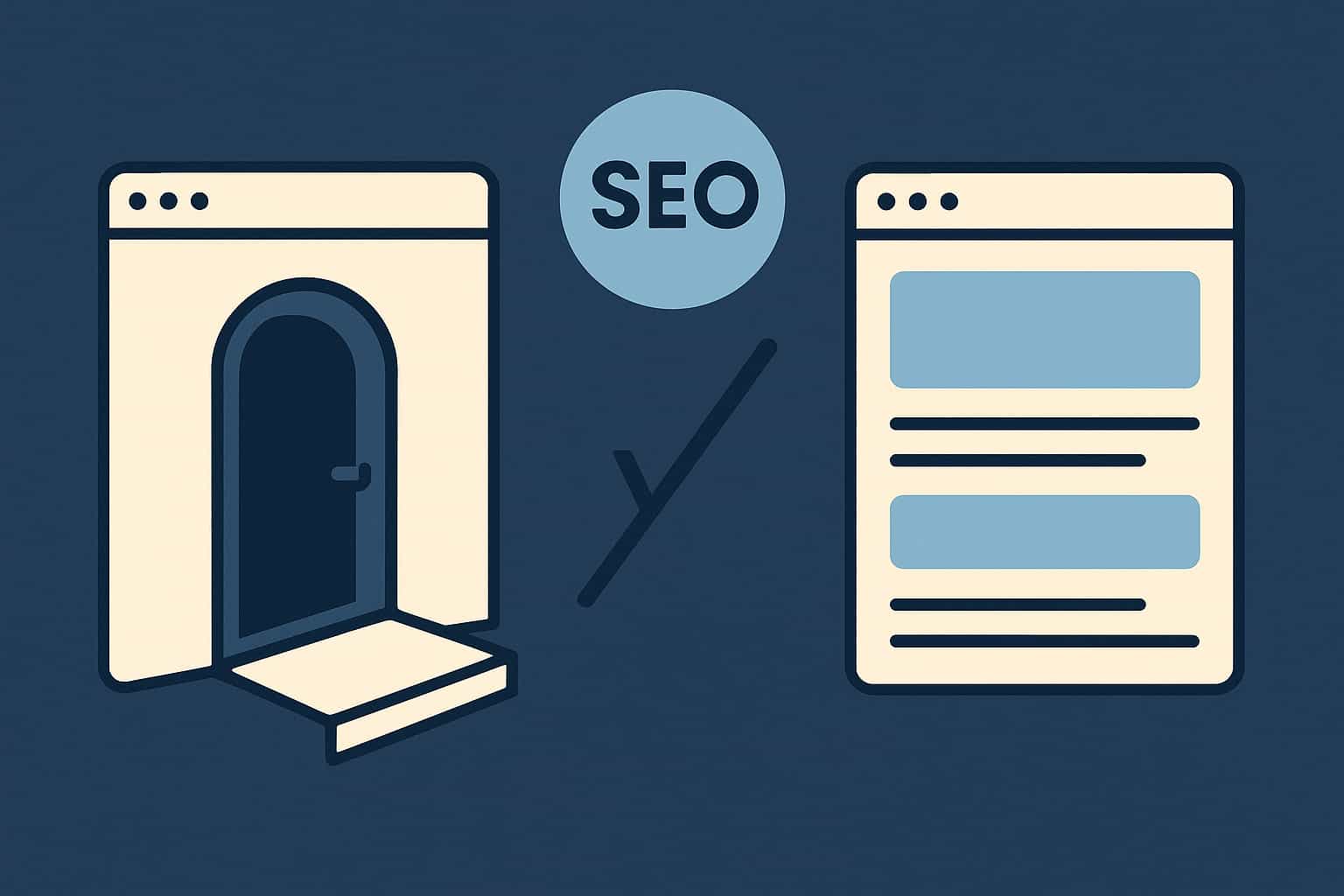
Programmatic Doorway Pages vs Scalable Content: Which Strategy Wins SEO in 2025?
Published December 13, 2025. You probably saw both strategies debated in forums and Slack channels.
This article breaks down programmatic doorway pages vs scalable content so you can pick what fits your site. I'll give clear examples, step-by-step checks, and real-world ideas you can use today.
What are programmatic doorway pages?
Simple definition
Programmatic doorway pages are mass-generated pages built to target lots of keywords quickly. They usually follow a template and swap in variables like city, product, or service names.
They aim to capture search traffic at scale by matching many search queries with similar pages. That sounds efficient, but there are big caveats for SEO and user value.
How they work
You feed a template and data into a generator, and it churns out hundreds or thousands of pages. Each page looks unique but often shares the same structure and thin content.
Examples include local service pages for every neighborhood or product pages for every color-size combination. That's programmatic doorway pages in action.
Example scenario
Imagine a plumbing site that auto-creates pages like plumber-in-[neighborhood]-[zipcode]. Each page has a short paragraph and contact form. It can attract local queries, but Google may see it as low-value duplication.
What is scalable content?
Simple definition
Scalable content means systems and processes that let you publish quality content consistently. You still aim for unique, useful pages, but you make scaling repeatable and efficient.
Scalable content focuses on templates for structure, content briefs for writers, and automation for distribution, not on thin mass-generation.
How it works
You build a repeatable content framework: keyword research, optimized outlines, editorial guidelines, and content workflows. Writers or AI create unique articles that fit the framework.
Then you iterate, test, and improve based on performance. The goal is growth while keeping value high for users and search engines.
Example scenario
Take a SaaS blog that produces a 1,500-word guide for each common customer problem. Templates ensure each guide has intro, steps, examples, and a conclusion. Writers adapt the template so each guide reads original and helpful.
SEO risks and rewards
Programmatic doorway pages: risks first
The main risk is thin or duplicative pages that offer little user value. Search engines may ignore or penalize such pages if they seem built solely for rankings.
That said, well-built programmatic pages can work when they deliver genuinely unique, localized, or data-driven value. It's a narrow path you must walk carefully.
Programmatic doorway pages: potential rewards
If each page answers a real query with unique data or tools, you can capture lots of long-tail organic traffic. Efficiency is the big upside here.
Think of pages that auto-display local inspection fees, permit rules, or specific statistics per zip code. Those have clear user value.
Scalable content: rewards
Scalable content usually wins long-term because it builds topical authority and earns backlinks. Quality pages attract users, shares, and links naturally.
It compounds: one well-researched guide can keep bringing traffic for years, then support related pages on the site.
Scalable content: risks
The main risk is resource cost and slower initial growth. High-quality content needs research, editing, and promotion to stick.
You also risk inconsistent quality if your process doesn't include strong editorial standards and QA checks.
Case studies and real-world examples
Hypothetical programmatic example
Imagine a travel directory that generated pages for every hotel-room combination with three sentences and availability data. The site saw a short boost in rankings, but many pages had minimal engagement.
Search engines eventually down-ranked pages that didn't help users, and the site lost traffic until they improved content depth. This shows the danger of thin programmatic doorway pages.
Hypothetical scalable content example
A health startup built a scalable content system producing original 1,200-word guides with expert quotes. They used a template but required unique research and references for each piece.
Over nine months they doubled organic traffic and started ranking for competitive queries. The approach cost more, but the traffic was sticky and monetizable.
Step-by-step: How to test programmatic doorway pages ethically
Checklist before you build
- Ask: does this page add unique, real value for users?
- Collect data points that make each page different, like local stats or user-generated reviews.
- Create full content briefs that require at least 300-800 unique words per page with real data or tools.
Don't launch thousands of near-identical pages the first time. Start with a sample set and measure engagement.
Testing steps
- Generate 20 pages with different variables and track impressions, CTR, and bounce rate.
- Run user tests or surveys to confirm the pages answer real questions.
- If metrics are poor, pause automation and expand content depth or combine pages.
Step-by-step: How to scale content properly
Build the process
- Create topic clusters and templates for each intent type (how-to, comparison, local guide).
- Write clear briefs and link them to examples, sources, and formatting rules.
- Use a content calendar and track performance for each piece, then iterate based on data.
Promote new content with outreach and internal linking so your site signals authority to search engines.
Pros and cons comparison
Programmatic doorway pages: pros
- Fast to produce large numbers of pages.
- Good for data-driven, localized content if done right.
- Can capture many long-tail queries quickly.
Programmatic doorway pages: cons
- High risk of thin content and search penalties.
- Often low user engagement without real uniqueness.
- Requires careful testing and quality controls.
Scalable content: pros
- Builds authority and earns backlinks naturally.
- Better long-term ROI and more sustainable growth.
- Higher user engagement and conversion potential.
Scalable content: cons
- Slower to ramp and needs more investment.
- Requires editorial standards and consistent execution.
Which strategy should you pick in 2025?
If you want quick coverage and you can guarantee each page has unique, useful data, programmatic doorway pages can work. But they need strict quality checks.
Most sites will win with scalable content because it builds trust, backlinks, and long-term traffic. If you can invest in processes, this is the safer play.
Final recommendation and quick action plan
Start by auditing your goals. Ask whether you need breadth (many specific pages) or depth (fewer, higher quality pages). Use the keyword programmatic doorway pages vs scalable content to guide team discussions and test plans.
Quick action plan:
- Run a 20-page programmatic test only if each page adds real data or a tool.
- Create 5 scalable content templates and publish one pillar article per month for three months.
- Measure engagement, backlinks, and conversions, then double down on the winner.
Conclusion
Programmatic doorway pages vs scalable content isn't a trick question — it's about trade-offs. Programmatic pages can deliver scale fast, but they often fail without clear user value.
Scalable content takes more work, but it usually wins in longevity, authority, and conversions. By testing carefully and focusing on user value, you can mix both tactics responsibly. Which will you try first?