
Introduction
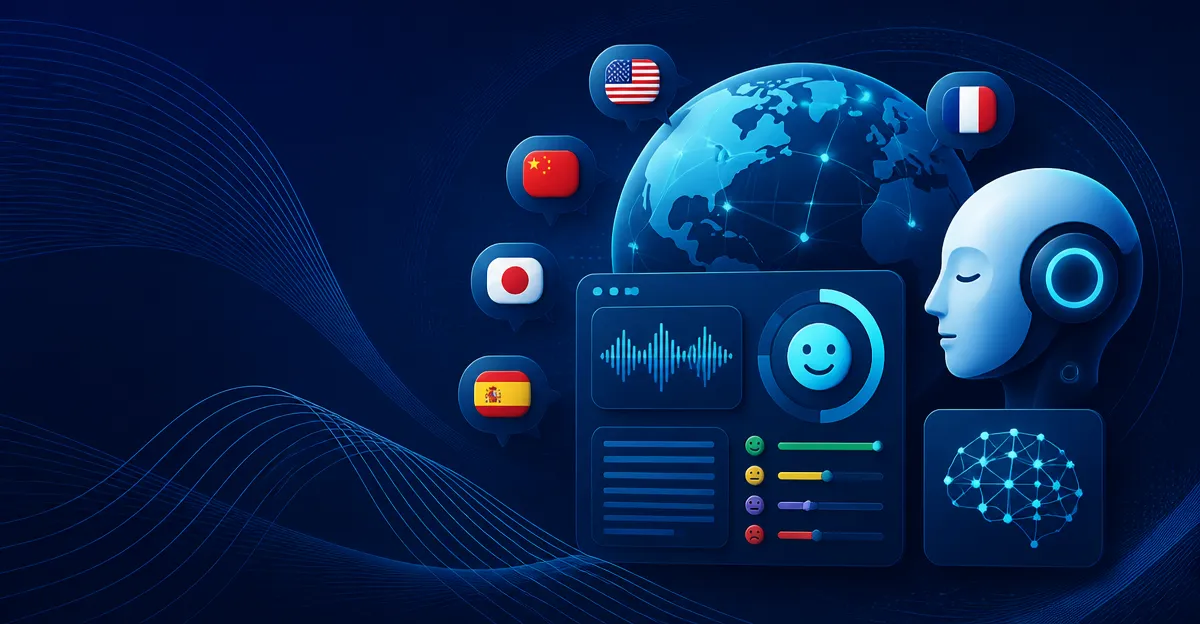
Automated multilingual tone detection has become a cornerstone of responsible AI content creation. Organizations that generate text in multiple languages must ensure that the emotional nuance of each message aligns with cultural expectations.
This guide provides an in‑depth exploration of the tools, techniques, and best practices required to implement reliable tone detection across diverse linguistic contexts.
Understanding Tone Detection
Definition and Scope
Tone detection refers to the computational identification of the emotional or stylistic attitude conveyed by a piece of text. It goes beyond simple sentiment analysis by distinguishing between formal, casual, persuasive, or urgent tones.
In a multilingual environment, tone detection must account for language‑specific idioms, politeness conventions, and register variations.
Why Tone Matters in AI‑Generated Content
AI systems that produce marketing copy, customer support replies, or news summaries can inadvertently adopt an inappropriate tone, leading to brand damage or user disengagement. Accurate tone detection enables automated quality control before content reaches end users.
Furthermore, regulatory frameworks in certain regions require that communications maintain a specific level of formality, making tone compliance a legal consideration.
Importance of Multilingual Tone Detection
Global brands interact with audiences in more than one hundred languages, each with distinct cultural expectations. A phrase that sounds friendly in English may appear overly familiar in Japanese, while a direct call‑to‑action could be perceived as aggressive in German.
Automated tone detection allows organizations to scale language‑specific adjustments without hiring native reviewers for every piece of content.
Core Challenges
Lexical ambiguity presents a primary obstacle; words often carry different connotations depending on context. For example, the English word "cheap" can imply affordability or low quality, and its equivalents in other languages may split these meanings.
Additionally, data scarcity for low‑resource languages hampers the training of robust models, requiring creative transfer‑learning strategies.
Overview of Automated Solutions
Current solutions fall into three broad categories: rule‑based systems, traditional machine‑learning models, and deep‑learning architectures. Each approach offers a trade‑off between interpretability, scalability, and accuracy.
Choosing the appropriate solution depends on factors such as language coverage, volume of content, and available computational resources.
Rule‑Based Approaches
Lexicon Construction
Rule‑based systems rely on curated dictionaries that map words and phrases to tonal categories. These lexicons are often built by linguists who annotate entries with tags such as "formal", "informal", or "authoritative".
While lexicons provide transparent decision logic, they require continuous updates to reflect evolving slang and domain‑specific jargon.
Pattern Matching Techniques
Regular expressions and pattern‑matching engines can detect structural cues, such as the presence of honorifics in Korean or the use of the subjunctive mood in Spanish. These patterns help identify formality levels without statistical modeling.
However, pattern matching struggles with nuanced expressions that depend on broader discourse context.
Machine‑Learning Approaches
Feature Engineering
Traditional machine‑learning pipelines extract handcrafted features, including n‑grams, part‑of‑speech tags, and lexical diversity metrics. These features feed into classifiers such as Support Vector Machines or Random Forests.
Feature engineering offers interpretability but often requires extensive domain expertise to achieve high performance.
Supervised Classification Models
Annotated corpora containing tone labels enable supervised learning. Models are trained to predict tonal categories for new sentences, achieving reasonable accuracy when sufficient labeled data exist.
One limitation is that models trained on a single language rarely generalize to others, necessitating separate training for each target language.
Deep‑Learning and Transformer Models
Multilingual BERT (mBERT)
mBERT is a transformer model pre‑trained on Wikipedia data from over one hundred languages. Fine‑tuning mBERT on tone‑labeled datasets allows the model to capture cross‑lingual tonal patterns.
Because mBERT shares parameters across languages, it can transfer knowledge from high‑resource languages to low‑resource ones, mitigating data scarcity.
GPT‑Based Solutions
Large language models such as GPT‑4 can be prompted to classify tone or to generate tone‑consistent rewrites. By providing few‑shot examples, practitioners can achieve zero‑shot tone detection for languages not explicitly covered in the training data.
These models excel at contextual understanding but demand substantial computational resources and careful prompt engineering to avoid hallucinations.
Tool Landscape
Several commercial and open‑source tools incorporate multilingual tone detection capabilities. The table below summarizes key attributes.
- Google Cloud Natural Language – supports sentiment and syntax analysis in 30+ languages; tone detection requires custom models.
- Microsoft Azure Text Analytics – offers sentiment and language detection; tone classification can be built with Azure Machine Learning.
- IBM Watson Tone Analyzer – provides tone categories (e.g., joy, sadness) for English and limited multilingual support via custom extensions.
- Open‑Source spaCy with multilingual pipelines – enables rule‑based and statistical tone tagging through custom components.
- Hugging Face Transformers – hosts multilingual BERT, XLM‑R, and GPT variants that can be fine‑tuned for tone detection.
Selecting the Right Tool
Practitioners should evaluate tools against the following criteria:
- Language coverage – does the tool support all target languages?
- Customization options – can one upload domain‑specific lexicons or fine‑tune models?
- Scalability – does the solution handle high‑throughput content pipelines?
- Interpretability – are model decisions explainable for compliance purposes?
- Cost structure – what are the licensing or compute expenses?
Integration Workflow
The following step‑by‑step workflow illustrates how to embed automated tone detection into an AI content generation pipeline.
- Data Collection – gather a representative corpus of multilingual text with human‑annotated tone labels.
- Pre‑Processing – normalize Unicode, remove HTML tags, and segment text into sentences.
- Model Selection – choose a baseline (e.g., mBERT) and decide whether to augment with rule‑based components.
- Fine‑Tuning – train the model on the annotated corpus, employing cross‑validation to prevent over‑fitting.
- Evaluation – compute precision, recall, and F1‑score for each tonal category across languages.
- Deployment – expose the model via a REST API or integrate directly into the content generation service.
- Post‑Processing – apply language‑specific post‑rules to adjust borderline cases (e.g., downgrade overly casual tone in formal contexts).
- Monitoring – track drift by periodically re‑evaluating the model on fresh data and updating the lexicon as needed.
Best Practices
- Maintain a living lexicon that captures emerging slang and region‑specific idioms.
- Combine rule‑based filters with statistical models to benefit from both interpretability and contextual awareness.
- Leverage transfer learning from high‑resource languages to improve performance on low‑resource targets.
- Implement human‑in‑the‑loop review for high‑risk content, such as legal notices or crisis communications.
- Document model versioning and data provenance to satisfy audit requirements.
Case Study: Global E‑Commerce Platform
A multinational e‑commerce company needed to ensure that product descriptions maintained a persuasive yet respectful tone across twenty languages. The organization adopted a hybrid approach, using a multilingual BERT model fine‑tuned on 50,000 annotated sentences and a rule‑based module that flagged honorific misuse in Japanese and Korean.
After deployment, the platform observed a 27 % reduction in customer complaints related to tone, and conversion rates increased by 4 % in markets where the tone adjustment was most pronounced.
Case Study: International News Agency
An international news agency required automated tone checks for breaking‑news alerts to avoid sensationalism. The agency fine‑tuned XLM‑R on a corpus of 30,000 headlines labeled as "neutral", "alarmist", or "optimistic".
Integration with the agency’s publishing workflow enabled real‑time alerts when a headline crossed a predefined alarmist threshold, allowing editors to intervene before distribution.
Pros and Cons Comparison
The following comparison highlights strengths and limitations of each major approach.
- Rule‑Based Systems:
Pros – transparent decisions, low compute cost.
Cons – brittle to linguistic variation, high maintenance. - Traditional Machine Learning:
Pros – interpretable features, moderate resource needs.
Cons – limited contextual understanding, requires language‑specific data. - Deep‑Learning Transformers:
Pros – strong cross‑lingual performance, adaptable to new domains.
Cons – expensive training, potential opacity for compliance.
Future Trends
Emerging research focuses on few‑shot and zero‑shot tone detection, enabling models to adapt to new tonal categories with minimal labeled data. Prompt‑engineering techniques are also advancing, allowing large language models to infer tone without explicit fine‑tuning.
Another trend is the integration of affective computing sensors, such as facial expression analysis, to align textual tone with multimodal user feedback, creating a feedback loop for continuous improvement.
Conclusion
Automated multilingual tone detection is essential for organizations that rely on AI‑generated content to engage diverse audiences. By understanding the spectrum of available techniques, selecting tools that match operational constraints, and adhering to best‑practice guidelines, practitioners can achieve consistent, culturally aware communication at scale.
Continued investment in data annotation, model monitoring, and interdisciplinary collaboration will ensure that tone detection remains robust as languages evolve and new AI capabilities emerge.
Frequently Asked Questions
What is automated multilingual tone detection?
It is the use of AI to identify the emotional or stylistic attitude of text across different languages, considering idioms, politeness, and register.
How does tone detection differ from sentiment analysis?
Tone detection distinguishes specific styles such as formal, casual, persuasive, or urgent, whereas sentiment analysis only gauges positive, negative, or neutral feelings.
Why is tone detection critical for AI‑generated content?
It prevents inappropriate or off‑brand messaging that can damage reputation, disengage users, or breach regional regulatory requirements.
What challenges arise when detecting tone in multiple languages?
Language‑specific idioms, cultural politeness norms, and varying registers require models to be trained on diverse linguistic data.
Which best practices ensure reliable multilingual tone detection?
Use language‑aware models, incorporate cultural dictionaries, and implement automated quality checks before publishing content.