In the rapidly evolving landscape of programmatic content pipelines, organizations frequently encounter legal subpoenas that demand swift yet precise responses. A well‑crafted runbook transforms this pressure into a repeatable, defensible process that safeguards both compliance and operational continuity. This guide presents a comprehensive, step‑by‑step methodology that aligns technical teams with legal obligations without sacrificing efficiency.
Understanding Legal Subpoenas in Programmatic Content Pipelines
A legal subpoena constitutes a formal request issued by a court or governmental agency that compels the production of specific data or documents. Within a programmatic content pipeline, such data may reside in distributed storage systems, real‑time event streams, or third‑party APIs, complicating the retrieval process. Failure to respond accurately can result in sanctions, reputational damage, or loss of privileged information.
Definition of a Subpoena
In legal terminology, a subpoena duces tecum requires the recipient to produce tangible evidence, whereas a subpoena ad testificandum demands personal testimony. For technology companies, the duces tecum variant is far more common because it targets logs, metadata, and content assets generated by automated workflows. The request typically specifies a date range, data type, and format, leaving little room for interpretation.
Why Subpoenas Matter for Pipelines
Programmatic pipelines process vast volumes of user‑generated and algorithmically curated content, creating a digital footprint that can be pivotal in investigations. Law enforcement agencies often rely on this footprint to establish timelines, identify responsible parties, or verify the authenticity of digital evidence. Moreover, compliance frameworks such as GDPR, CCPA, and industry‑specific regulations impose strict timelines for lawful data disclosure.
Preparing a Runbook
A runbook serves as a living document that codifies the organization’s response strategy from receipt of the subpoena to final verification of delivery. Its primary purpose is to eliminate ambiguity, reduce manual error, and provide a clear audit trail for internal and external reviewers. The creation process should involve cross‑functional collaboration among legal counsel, information security, data engineering, and operations leadership.
Core Components of the Runbook
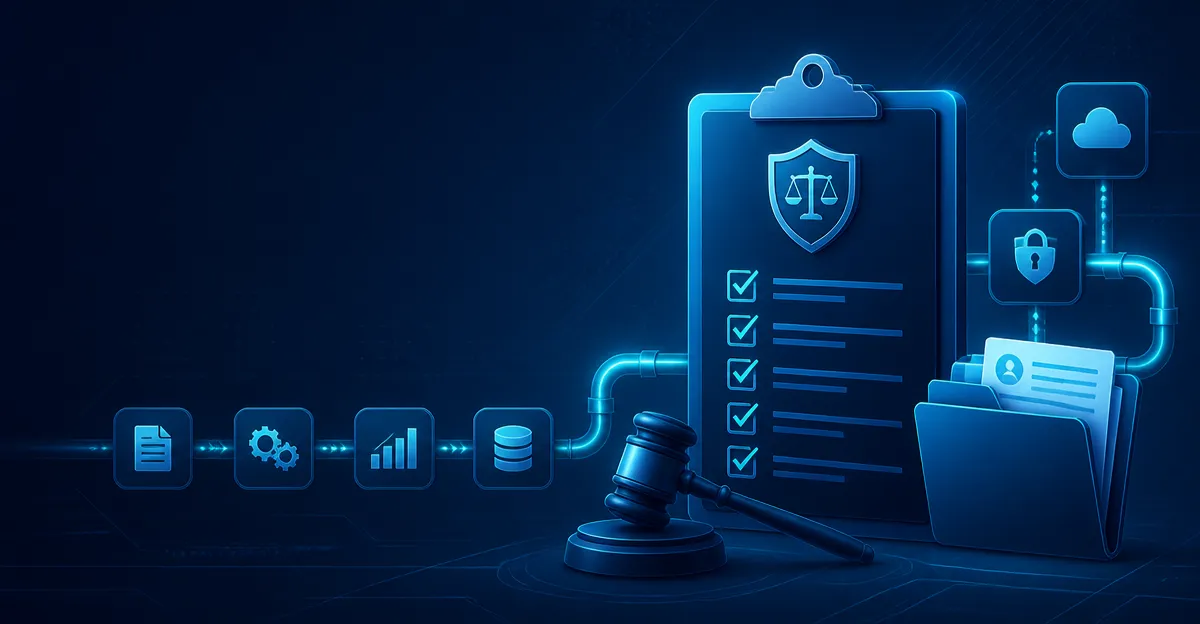
The runbook must contain a concise subpoena intake form, a data preservation checklist, a step‑by‑step extraction protocol, and a post‑delivery audit template. Each component should reference responsible owners, escalation paths, and defined service level objectives for each activity. Inclusion of a decision matrix helps teams determine when to engage external counsel or invoke privileged communication safeguards.
- Intake Form – captures subpoena identifier, issuing authority, and deadline.
- Preservation Checklist – outlines snapshot creation and hash generation.
- Extraction Protocol – details scripts, filters, and output formats.
- Audit Template – records delivery confirmation and verification steps.
Documentation Standards
All entries within the runbook should adhere to a consistent format that includes a unique identifier, a descriptive title, and a timestamp in UTC. Technical steps must reference specific system names, API endpoints, and data schemas to avoid ambiguity during execution. Legal references should cite the issuing authority, docket number, and any applicable statutory provisions.
Step‑by‑Step Process
The following numbered sequence outlines the end‑to‑end workflow that operational teams should follow whenever a subpoena is received. Each step incorporates both technical actions and legal checkpoints to ensure compliance without compromising data integrity. The process is intentionally modular, allowing teams to parallelize independent activities and reduce overall turnaround time.
1. Receive and Log the Subpoena
Upon receipt, the designated legal liaison records the subpoena in the central incident management system, assigning a priority tag of “Legal‑Urgent.” The liaison then notifies the data engineering lead, the security operations center, and the compliance officer within a fifteen‑minute window. The initial log entry must capture the subpoena identifier, issuing jurisdiction, required data categories, and the statutory deadline for response.
2. Validate Scope and Jurisdiction
The data engineering team reviews the requested data elements against the organization’s data inventory to confirm existence and location. Simultaneously, legal counsel assesses whether the jurisdictional reach of the subpoena aligns with the organization’s operational footprint and any data‑transfer restrictions. If conflicts arise, the team initiates a protective motion or seeks a clarification letter before proceeding.
3. Preserve Affected Data
Preservation involves creating immutable snapshots of the relevant data stores to prevent alteration during the extraction phase. Techniques include enabling bucket versioning, generating point‑in‑time database backups, and archiving streaming logs to write‑once read‑many (WORM) storage. The preservation log must record the snapshot identifiers, storage locations, and cryptographic hash values for later verification.
4. Review with Legal Counsel
Before any extraction occurs, the legal team conducts a detailed review of the preservation artifacts to confirm that the scope remains accurate and that privilege logs have been applied where appropriate. Counsel may issue a “redaction order” that specifies categories of data to be excluded, such as personally identifiable information not relevant to the investigation. The review outcome is documented in the runbook’s decision matrix, and any required modifications are communicated to the engineering team.
5. Extract Data According to Specification
Extraction scripts are executed against the immutable snapshots, employing filters that match the subpoena’s date range, content type, and metadata criteria. For example, a SQL query might select all records from the “UserPosts” table where “created_at” falls between the specified timestamps and “status” equals “published.” All extraction commands should output data in the format requested by the subpoena, such as CSV, JSON Lines, or encrypted PDF bundles.
6. Secure Transfer to Requesting Authority
Once extraction is complete, the data package is encrypted using a mutually agreed cipher suite, such as AES‑256‑GCM, and a secure hash is generated for integrity verification. The encrypted bundle is then transferred via a vetted channel, which may include a dedicated SFTP server, a secure file‑transfer portal, or an encrypted USB courier for highly sensitive material. Transfer logs must capture the recipient’s identity, timestamp, and hash verification result.
7. Post‑Delivery Audit and Closure
After delivery, the compliance officer conducts a final audit that cross‑references the original subpoena requirements with the delivered data set, hash values, and transfer records. Any discrepancies are escalated to legal counsel for remedial action, which may involve supplemental delivery or a formal explanation to the court. The incident ticket is then marked as resolved, and a lessons‑learned entry is added to the runbook’s continuous‑improvement section.
Pros and Cons of Automated vs Manual Handling
Organizations must decide whether to automate portions of the subpoena response workflow or rely on manual execution, each approach presenting distinct advantages and drawbacks.
- Automation Pros: Faster turnaround, reduced human error, consistent audit trails, scalability for high‑volume requests.
- Automation Cons: Requires upfront development effort, may lack flexibility for nuanced legal nuances, potential for misconfiguration.
- Manual Pros: Greater discretion for privilege assessment, easier adaptation to unique jurisdictional demands, lower initial tooling cost.
- Manual Cons: Slower response times, higher risk of transcription errors, limited repeatability for recurring subpoenas.
The optimal strategy often combines automated data preservation and hashing with manual legal review to balance speed and precision.
Real‑World Case Study
Company X, a global video‑sharing platform, faced a multi‑state subpoena demanding all user‑generated videos uploaded between January 1 and March 31, 2025, that contained copyrighted material. By activating its runbook, the legal liaison logged the request, the engineering team preserved the relevant storage buckets, and the compliance officer verified jurisdictional authority before extraction. The team delivered an encrypted archive within the court‑mandated thirty‑day window, and the post‑delivery audit confirmed zero discrepancies, resulting in a favorable judicial ruling and no sanctions.
Best Practices Checklist
The following checklist condenses the most critical actions that teams should verify before, during, and after a subpoena response.
- Log subpoena details in incident management system with priority tag.
- Validate scope, jurisdiction, and data‑transfer constraints with legal counsel.
- Create immutable snapshots and record cryptographic hashes.
- Obtain legal sign‑off on preservation artifacts and redaction orders.
- Execute extraction scripts that match exact date ranges and data types.
- Encrypt output using agreed‑upon cipher suite and generate verification hash.
- Transfer data via vetted secure channel and capture receipt acknowledgment.
- Conduct post‑delivery audit, resolve discrepancies, and document lessons learned.
Conclusion
A meticulously crafted runbook transforms the chaotic nature of legal subpoenas into a disciplined, auditable process that protects both compliance and operational resilience. By integrating legal review, data preservation, secure extraction, and rigorous post‑delivery auditing, organizations can meet statutory deadlines while preserving the integrity of their programmatic pipelines. Continuous refinement, regular training, and cross‑functional ownership are essential to sustain effectiveness as regulations and technologies evolve. Ultimately, the runbook becomes a strategic asset that demonstrates the organization’s commitment to lawful data stewardship.
Frequently Asked Questions
What is a subpoena duces tecum and how does it affect programmatic content pipelines?
A subpoena duces tecum orders the production of documents or data, often requiring logs, metadata, and content assets from automated pipelines to be delivered in a specified format.
Why is a runbook essential for responding to legal subpoenas in data pipelines?
A runbook provides a repeatable, defensible process that ensures timely, accurate data retrieval while maintaining compliance and operational continuity.
Which types of data sources are typically targeted by subpoenas in a content pipeline?
Subpoenas may target distributed storage, real‑time event streams, and third‑party APIs where logs, metadata, and content assets reside.
What are the risks of failing to respond correctly to a subpoena?
Incorrect or delayed responses can lead to sanctions, reputational damage, and potential loss of privileged information.
How should teams handle the date range and format specifications in a subpoena request?
Teams should use the runbook to filter data by the exact date range and convert it to the required format before secure delivery to the requesting authority.